
Flanges
Stainless steel flanges
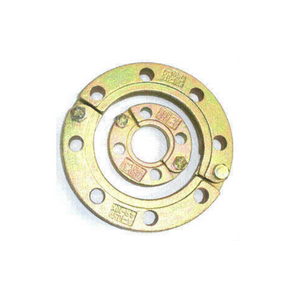
Stainless steel flanges to ASME, EN 1092-1 and JIS: slip-on, weld neck, blind, threaded, tongue and groove and split flanges.
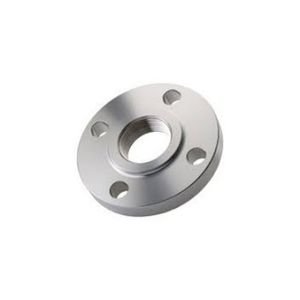
Product range
Stainless steel flanges: products
3 items. Open any product for its specifications, or request a quote for several at once.

Applications
Where they are used
- Process piping and pipe racks
- Pumps, vessels and heat exchangers
- Valves and instruments
- Water and fire lines
- Skids and fabricated spools
Get an accurate quote faster
Before you request a quote
Include these details and we can quote without back-and-forth:
- Flange type
- NPS or DN and pressure class (150 to 2500 or PN6 to PN100)
- Facing: RF, FF or RTJ, and the face finish
- Bore or schedule (for weld neck and socket weld flanges)
- Standard: ASME B16.5, B16.47, EN 1092-1, BS 4504 or JIS
- Material specification and grade
- Quantity and documents
How quoting works
- 1Send the requirementProduct, size, material, ends, pressure and quantity, with drawings or a list if you have them.
- 2We review itWe check the details and come back if anything is unclear or missing.
- 3You get a quotationItemised prices, delivery time and the documents that will be supplied.
- 4Order and deliveryWe supply to your site anywhere in India.
FAQ
Frequently asked questions
Which stainless grades are used for flanges?
ASTM A182 F304/304L and F316/316L are the most common. F321, F347 and F310 are used for high temperature, and F51, F53 and F44 for chloride service.
What is a tongue and groove flange?
A matched pair of flanges, one with a raised tongue and one with a groove, that locate the gasket and protect it from blow-out.
Which flange type should I choose?
Weld neck flanges suit high pressure, high temperature and cyclic loads. Slip-on flanges are easier to align and suit lower pressures. Socket weld flanges suit small-bore high-pressure lines, threaded flanges suit lines that cannot be welded, lap joint flanges with stub ends suit lines that are taken apart often, and blind flanges close a line or a nozzle.
What is the difference between RF, FF and RTJ facings?
Raised face (RF) flanges concentrate the gasket load on a raised ring and are the most common. Flat face (FF) flanges are used against cast iron or other brittle flanges. Ring type joint (RTJ) flanges seal with a metal ring in a groove and are used at high pressure and temperature.
Are Class 150 and PN16 flanges interchangeable?
No. ASME B16.5 classes and EN 1092-1 PN ratings use different bolt circles, bolt sizes and pressure-temperature tables, so a Class flange will not bolt to a PN flange of the same size. Tell us the standard of the mating flange.
What sizes and classes are covered by ASME B16.5?
ASME B16.5 covers NPS 1/2 to 24 in Classes 150, 300, 400, 600, 900, 1500 and 2500. Larger flanges, NPS 26 to 60, are made to ASME B16.47 Series A or B.
Next step
Tell us what you need
Part number, size, material or a full list: send it and get a clear quotation.